Weaving and Sailmaking

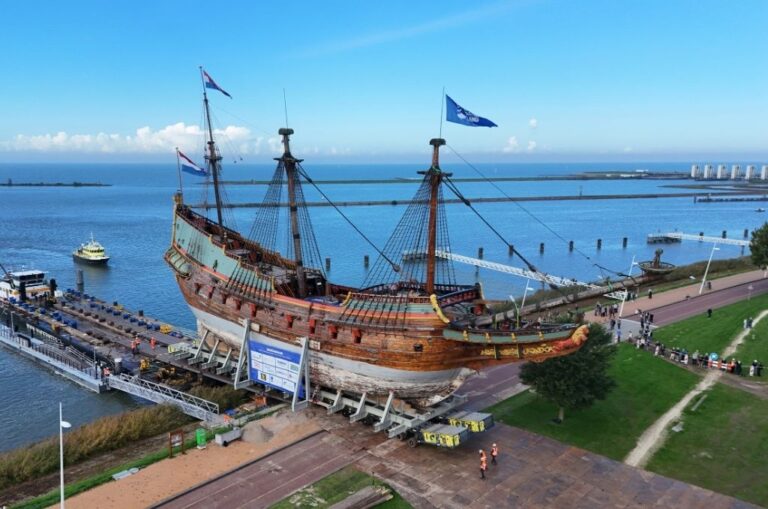
At Museum Batavialand’s Weaving and Sailmaking Shop, you can see how historical craftsmanship brings shipping to life. Here sails are woven and sewn for the reconstruction of historic ships, such as the mirror-return ship De Batavia from 1628. Fabrics, clothing and utility textiles are also made here according to 17th-century traditions. These crafts are indispensable for the construction and maintenance of the ships on display at the museum.

Hemp Yarns and Historic Looms
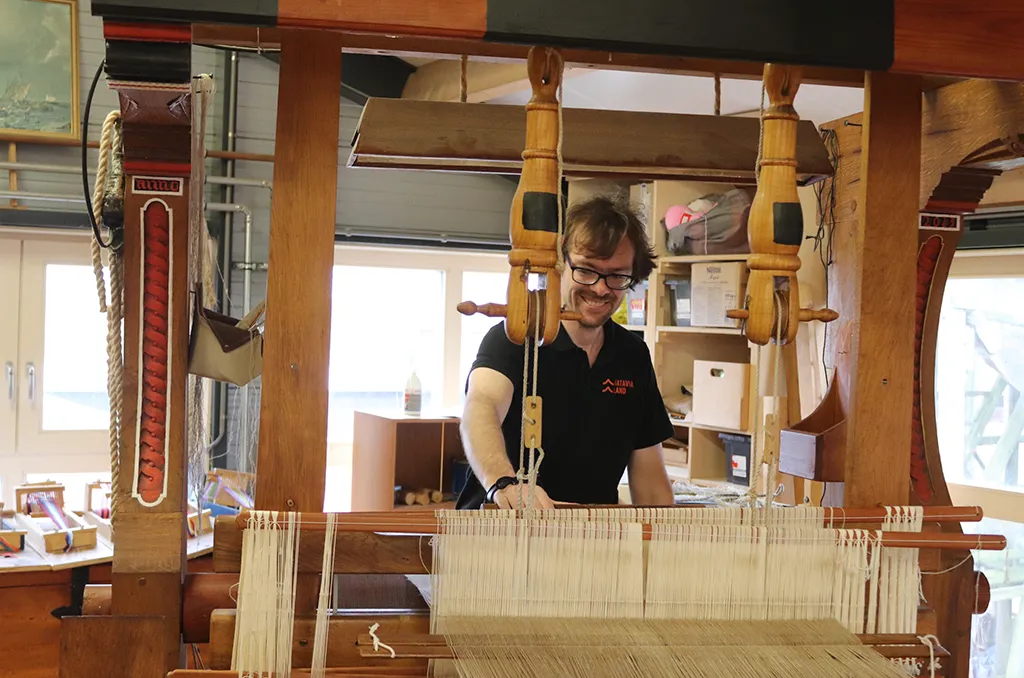
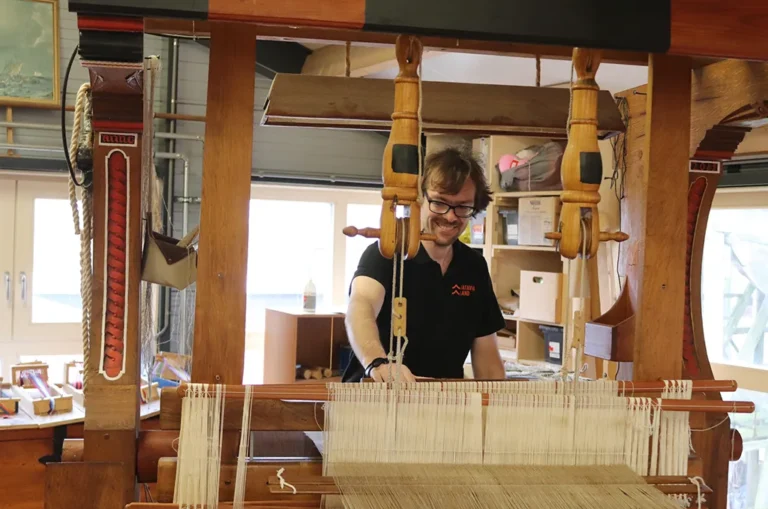
Making a sail begins on the loom. Strong hemp yarns, known for their durability, are processed into sturdy and windproof sailcloth. The warp yarns are stretched taut and the weft yarns are tightly wound. Thanks to the precision and dedication of our volunteers, this ancient technique is preserved.

Authentic weaving mill
The weaving mill shows how fabrics, clothing and utility textiles are made on historic looms. Materials that were also common in the past are used, such as linen and wool. Some of the yarn is spun, dyed and prepared on site. Thus, the whole process of weaving can be followed step by step. The fabric for our gunners’ clothing is also made here.

Flag-making: a colorful tradition

Seventeenth-century ship’s flags are also being researched. How exactly they were made, with what fabrics and colors. By doing research we are retrieving this lost knowledge.

Unique experience for visitors

During your visit to the weaving and sail-making workshop, you can watch the artisans at work live. They are happy to share their knowledge about the intricate weaving process, the techniques behind the sewing of sails and the stories intertwined with these crafts. Here, history becomes visible and tangible.

Crafts

Image carving

Modeling

Forge

Rigging

Weaving and Sailmaking